
Do you know that glaucoma (kalamatia) is the second leading cause of permanent blindness worldwide? The eyes work every moment to see the beautiful world around us. But some serious diseases like Glaucoma secretly damage our vision. The worrying part is that it progresses gradually and painlessly, and most patients are unaware that they are losing the power of sight until the problem becomes serious. That is why it is called a silent thief of sight.
What is Glaucoma?
An umbrella term for a group of eye diseases that affect the optic nerve, which plays a crucial role in our vision.
How does Glaucoma affect the eyes?
This progressive disease occurs by increasing the intraocular pressure, which gradually harms the optic nerve and drainage system. The optic nerve is responsible for carrying visual signals to the brain. When the nerve becomes weak, the brain won’t receive a clear picture, and the vision starts getting worse. Even in some cases, this complication can occur when the pressure is within normal range.
What are the symptoms?
The signs of this visual disorder are based on the following specific types.
- No symptoms are seen during the early stage.
- Over time, patchy blind spots may be noticed in side vision.
- Central vision difficulty in the advanced stages.
One-Angle Glaucoma:
Is a very common type in which the eye pressure is increased and damages the optic nerve. Here, the eye's drainage angle remains open, but fluid drains too slowly. In this complication :
- Vomiting
- Headache
- Redness
- Blurry vision
- Halos around lights
- Rapid vision loss
- Severe pain
Acute Angle-Closure Glaucoma:
This type is less common but more dangerous. Here, pressure is increased when drainage canals are blocked. Its signs are:
- It is asymptomatic at the initial stage
- Later, blurry vision may be seen
- In serious cases, peripheral vision loss may be noticed
Normal-tension Glaucoma:
In this form, the optic nerve is damaged even though eye pressure remains within normal range. Here:
- Initially, no symptoms may be apparent
- Later stages- cloudy vision and side vision loss happen
Secondary Glaucoma:
This rare form is caused by other vision conditions and eye injuries that increase the pressure. In this type:
- A dull or cloudy eye
- Increased blinking
- Tears without crying
- Nearsightedness
- Headache
- Blurred vision
Congenital Glaucoma:
This rare form is caused by other vision conditions and eye injuries that increase the pressure. In this type:
What are the causes?
- Genetic and family history
- Eye injuries and traumas
- Other visual complications
- Long-term use of medicines
- Aging
- Complications faced by mothers during pregnancy
Eye screenings to diagnose the disease
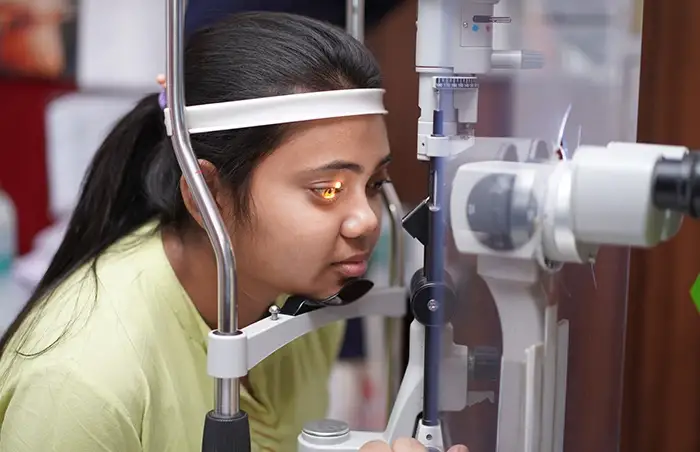
A large number of people ask, “My vision is good, so why do I need an eye exam?” The answer is that the disease often occurs silently before any pain or known signs appear. That is why early detection by the following tests is vital to treat this serious disease effectively.
- Tonometry
- Ophthalmoscopy
- Visual field test
- Gonioscopy
- Optical coherence tomography
- Pachymetry
Treatment
According to medical science, there is no complete cure for this progressive disease. But ophthalmologists use the following procedures that can slow down the progression to protect the vision from getting worse or going blind.
- Eye Drops: Eye specialists often start the treatment by prescribing drops to improve the fluid drainage and production system
- Oral Medication: Where eye drops are insufficient, a Glaucoma specialist advises oral medication to decrease the intraocular pressure.
- Laser therapy: Ophthalmologists may recommend laser therapy when medications do not control eye pressure adequately. But it is not a permanent solution and may need to be repeated or combined with medication. The therapies are: Trabeculoplasty: for open-angle glaucoma. Iridotomy: for acute angle-closure glaucoma. Cyclophotocoagulation-Used in severe cases.
- Surgery: When medication and laser therapy are not effective, eye surgeons go for surgical treatment to create a new pathway for fluid drainage. Surgeries are: Trabeculectomy or filtering surgery. Drainage implants. Minimally invasive glaucoma surgery (MIGS).
Am I at risk for this disease?
Anyone can be affected by this vision issue, but the following people are at higher risk than others.
- 40+ age
- Persons with a family history
- People with high intraocular pressure
- Men and women with chronic diseases
- Person with previous eye injuries and surgeries
- Excessive users of steroids
- People with thin corneas
- Patients with existing visual disorders
- Children whose mothers faced complications during pregnancy
How to prevent Glaucoma?
It's not curable or preventable, but the risk of developing or losing vision permanently can be significantly reduced through proactive eye care. This preventive care is also important for those who are living with this disease because lifelong monitoring is required for their treatment. The measures are:
- Regular eye checkups
- Consult with eye experts
- Maintain a healthy diet and drink sufficient water
- Control blood sugar, cholesterol, and blood pressure
- Increase physical activities
- Eye rest and proper sleep
- Protective eyewear
- Limit screen time and UV exposure
- Quit smoking and alcohol habits
- Avoid steroid use

Eyes are the windows to your soul that allow you to enjoy life, but this vision disorder is a silent enemy of vision. You can preserve vision with early detection, prompt treatment and proper eye care. At Renuka Eye Institute, one of the best eye hospitals in Kolkata, we offer comprehensive screening and effective treatment by our experienced glaucoma specialists to help you save your sight. If you are at high risk, don’t hesitate to schedule an appointment with our top glaucoma doctors.